this blog is a visual notebook of inspirations for a group of bandit bloggers. we post things we see and like. our lives don’t revolve around singular topics and neither does our blog. sorry! nothing is in-or-out of context here. enjoy xx
“the restoration of the material is like cleaning the sistine chapel with saliva. it is insane, the epic size of the film. i mean, i’ve seen it on the big screen in telluride at a theatre – but i’ve never seen the movie until i saw this restoration.” – guillermo del toro
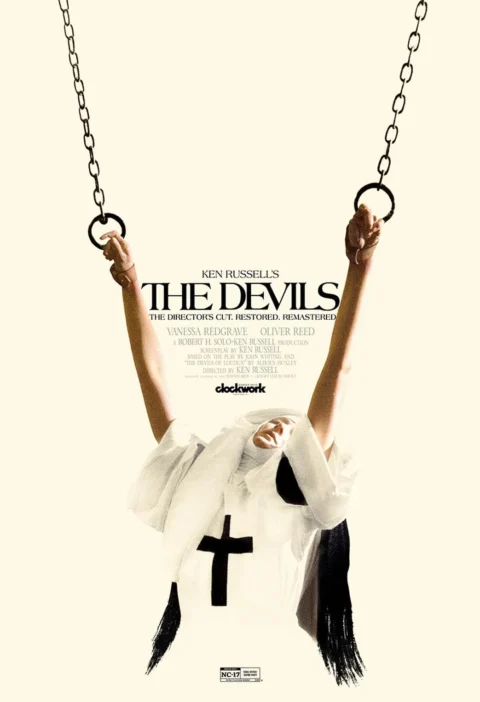
ken russell’s film the devils UK trailer – restored 35mm film in cinemas now
the devils is a 1971 historical psychological horror-drama film written, produced and directed by british film maker ken russell, and starring vanessa redgrave (antonioni blow up actress) and oliver reed.
it is in part adapted from the 1952 non-fiction book the devils of loudun by aldous huxley.
the film’s graphic portrayal of violent and sexual content, often combined with religion, ignited harsh reaction from censors, and it originally received an x rating in both the united kingdom and the united states. it won awards for best director at the 33rd venice international film festival, as well as from the u.s. national board of review.
an enduring masterpiece of cinema and an epic tale of obsession and corruption – and a defining work of art from filmmaker ken russell. the new 35mm restoration is the uncut and unfiltered theatrical experience that russell always envisioned – and the first time the film will be presented restored and in 4k. a must see for any film buff. by th
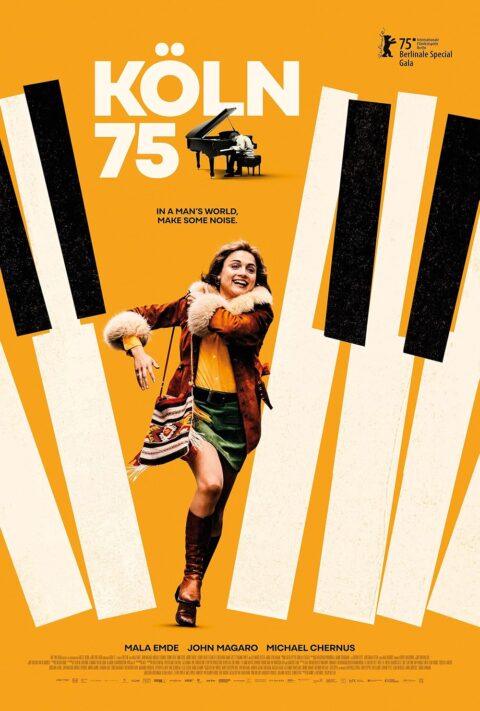
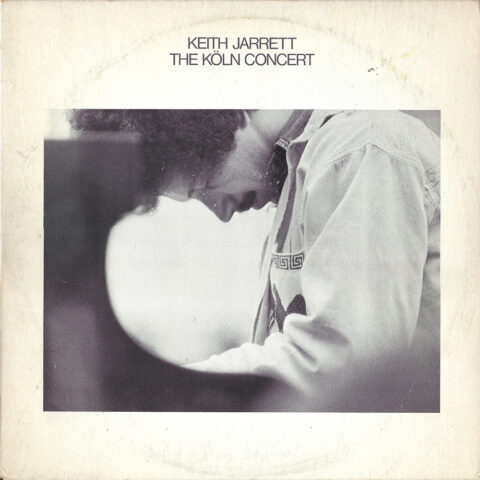
in film news i just saw koln75 by ido fluk a young german/american director – terrific film about the young woman who organized the famous koln concert by keith jarrett in 1975 and kick started his solo concert career. beautifully done chamber piece for a small cast. by jp
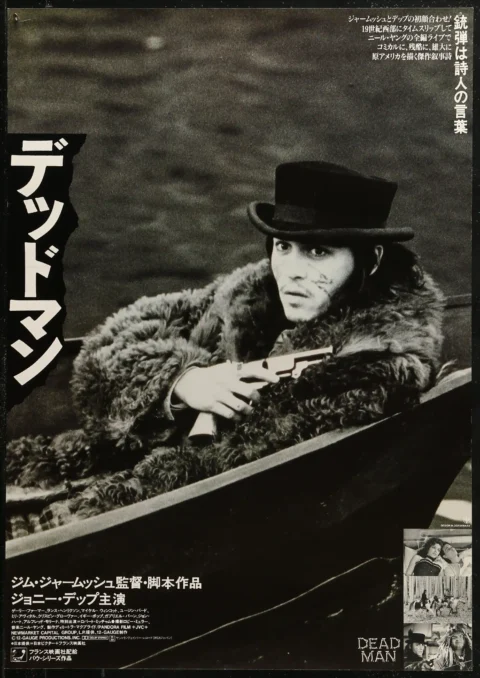
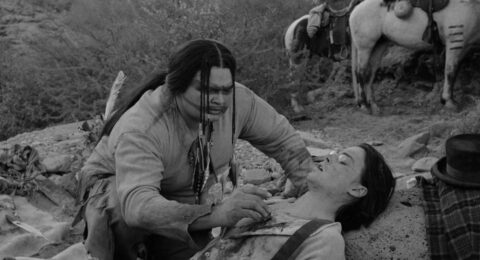
dead man: a film by jim jarmusch featuring johnny depp music by neil young…
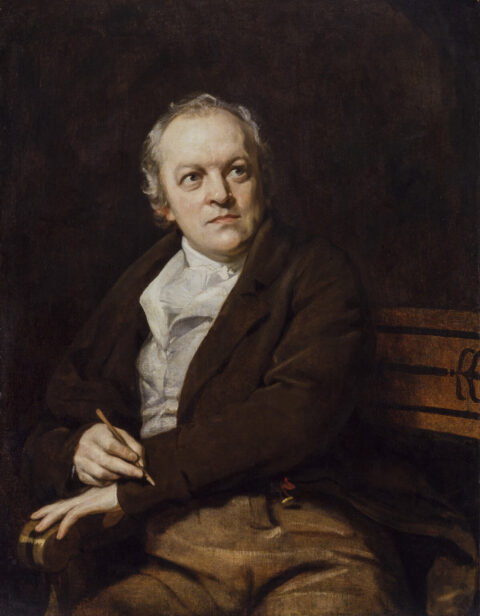
english poet, painter, print maker, william blake (1757–1827). largely unappreciated in his own lifetime, he is now celebrated as a visionary genius of the romantic era. apparently big with the ravers in the uk… who knew…
nobody tending to johnny depp in dead man,,,
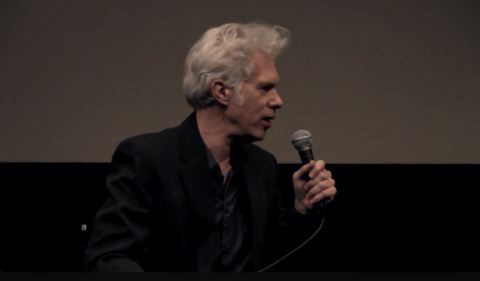
below: interview with jim jarmusch Q&A dead man lincoln center NY.
below: neil young score – genius 10 out of 10… cinematography by robby müller… id give it 7 out of 10 – robby… comparing it to your other work. excellent film non the less.
below interview with “nobody”
dead man interview with jim jarmusch and also gary farmer “nobody”. if you’ve seen the film watch this Q&A… if not, watch the film, then watch this Q&A… and tim, you are william blake in this film my boy… by uh
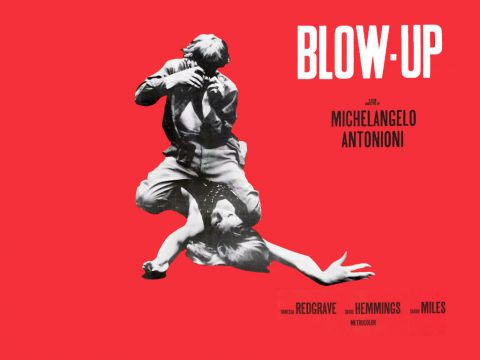
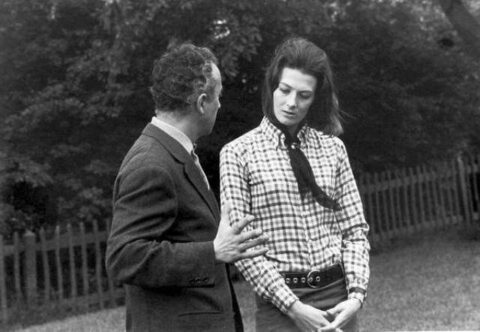
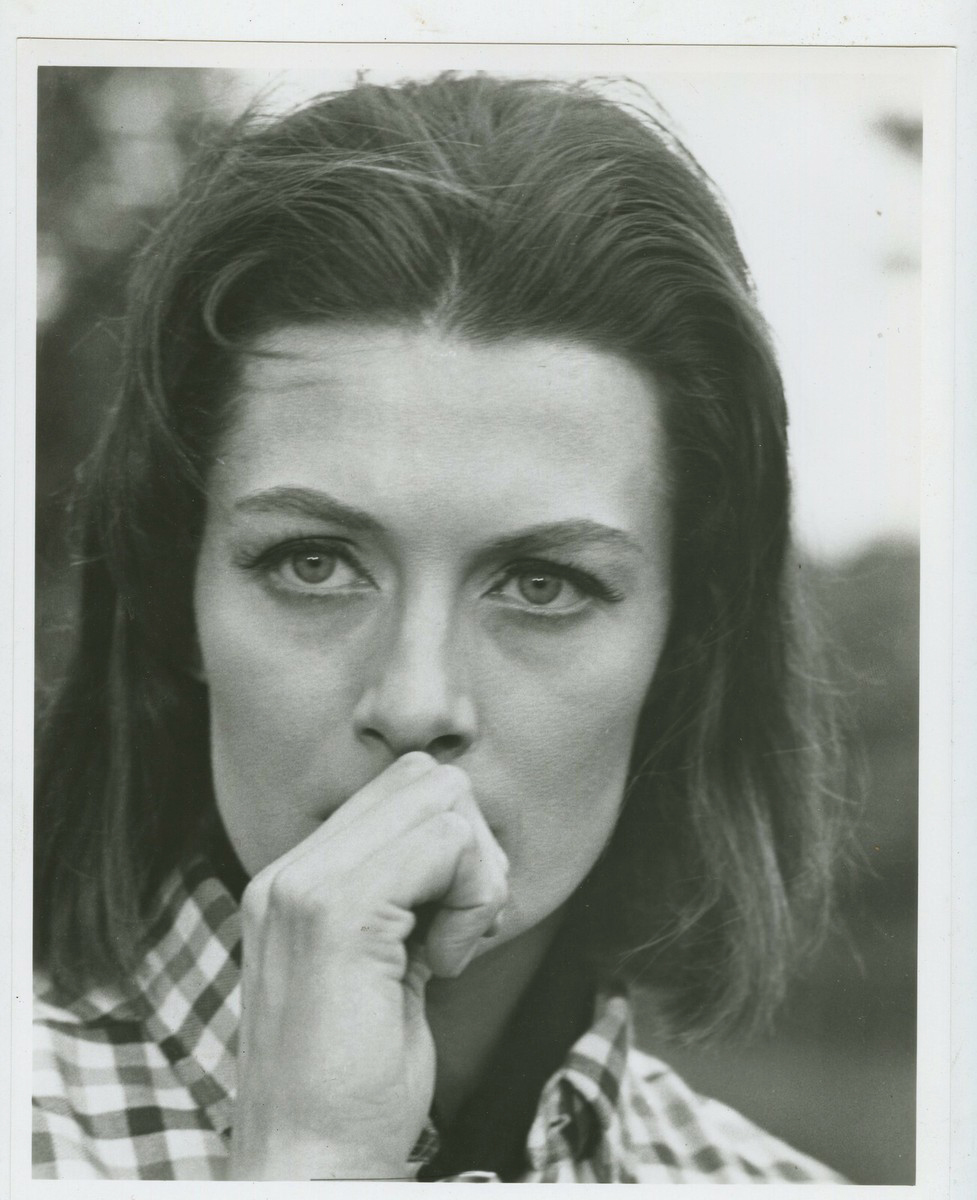
vanessa redgrave started in michelangelo antonionis movie blow up
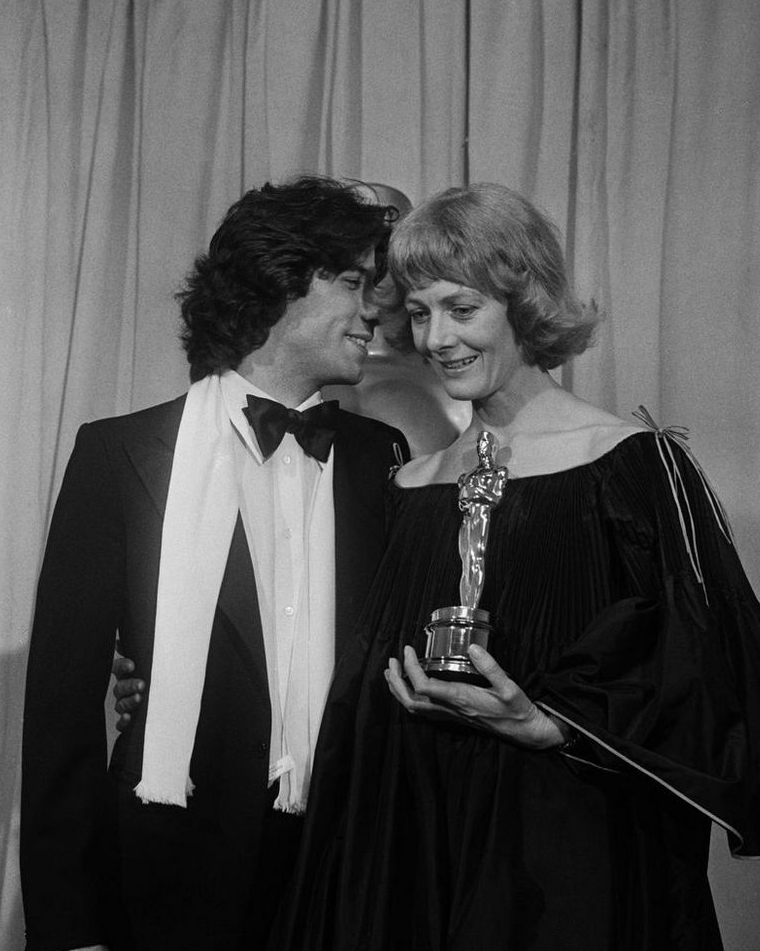
in 1978, vanessa redgrave received major backlash for her best supporting actress oscar acceptance speech.
watch the break down to everything that led to this moment and the ways the industry reacted to it—why vanessa redgrave made a documentary in support of the palestinian people, how violence erupted to silence her, and how her anti-zionism affected the course of her career.
vanessa redgrave with john travolta
“i refuse to be intimidated… “
hannah einbinder emmies speech was not the first one… this goes way back… watch the story of this british lost icon… if video is not working you can try this link on you tube here. by ae
“men are more moral than they think, and much more immoral than they can imagine.” – sigmund freud
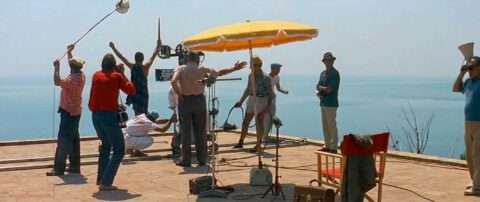
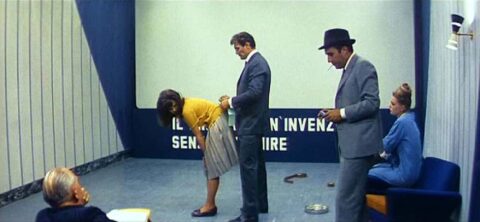
excerpts from cineaction and beautiful write-up by george porcari: “…in the 1960’s jean-luc godard was shifting genres with what seemed like effortless bravado often mimicking the work of different directors. by 1964 it was clear that he had the various film genres – established primarily in hollywood over the previous half century – in his pocket and he made extensive use of them in a quick succession of masterworks throughout the 1960’s that has no equal in film history. godard’s films from the 1960’s comprise 25 features and 8 shorts. while other directors covered a lot of ground in terms of genres – one need only think of howard hawks’ filmography – they never did so in such an intensely concentrated and productive period using the same group of actors and technicians to help them realize that body of work.
godard’s characters in his films from the 1960’s, including le mepris (contempt, 1964) often find that they are in “the wrong film.” this is a typical godardian strategy of displacement – often accomplished with tongue planted firmly in cheek. one thinks of lemmy caution in alphaville, who is the proverbial tough guy detective who comes from raymond chandler’s los angeles and the noir school of american cinema but finds himself caught in a science fiction film set in contemporary paris; or emily brontë who belongs in a bbc biopic but ends up (to her horror) in the wasteland of weekend; or the pimps and gangsters in vivre sa vie, who come from the hardscrabble hollywood gangster films of raoul walsh and melvin leroy but find themselves in a film modeled on carl dryer’s slow, sensitive, metaphysical cinema – even they sense that they are in the wrong film, all dressed up and with nowhere to go.
“i’ve seen the novel of today at the cinema…it’s called le mepris, the novelist is someone named godard.” – louis aragon
le mepris is a film that mimics michelangelo antonioni’s aesthetic as godard astutely copies antonioni’s oblique modernist framing, mysteriously empty spaces, slow italicized camera pans, and ambiguous shifts in space – with humans never quite sure where they belonged or how they should act. in antonioni’s work the famous “alienation” at hand was always an aftereffect – the main attraction was always the interaction of his beautiful main characters and the strange social world that mankind had created, seemingly ad-hoc – a social space that was, to a degree, efficient, logical, and clean – what french sociologist marc augé called a “non-place” in his “anthropological” study of contemporary (1994) urban life. these “non-places” are often areas of high transit: airports, hospitals, subway stations, parking structures, business parks, and perhaps the most conspicuous of “non-places,” the corporate office. what antonioni noticed was that these “non-places” were strangely ill suited to emotions, spontaneity, sexuality, and human quirks. these spaces required a flattening out of our nature producing a neutered emotional blankness seen to full effect in stanley kubrick’s 2001: a space odyssey. while antonioni was not the first or the only person to notice these sorts of spaces – one need only think, aside from kubrick’s film, of orson welles’s the trial, billy wilder’s the apartment, or jacques tati’s playtime – he was the person who made such spaces a central characteristic in a consistent body of work.
while human factors were never suppressed or controlled by the state in antonioni’s films – as we see in the work of george orwell (1984) or anthony burgess (a clockwork orange)- they were nevertheless managed and directed, but how? was it, as the frankfurt school and michele foucault suggested, controlled by a cabal of conformist cultural producers, a plutocracy, and the state apparatus? or was there a more complex, organic relationship at work? were these emotions and instinctual appetites anachronistic or still in some way relevant, aside from their reproductive function? how does one navigate this new “non-place?” these were the central question at the heart of every antonioni film and godard here takes up these questions.
“modernity possesses antiquity like a nightmare that creeps over it.” – walter benjamin
but while antonioni’s films adhered to a form of neo-classical modernism godard’s work didn’t follow those rules. antonioni’s films were austere, detached, critical, ironic, and moralizing, and godard managed to touch on all of these – sometimes lightly (a married woman) and sometimes bluntly (weekend) – but he also brought with him his own ‘excess baggage.’ his work was full of unruly paradoxes and clashing contradictions that were carefully layered and juxtaposed. le mepris is emotionally extravagant but with a cool, sardonic edge; there is an uneasy tension between symbols and documentary realism, between romantic sincerity and hardheaded irony, between classical quotations and topical jokes; between heartfelt displays and mocking attacks. while le mepris evoked antonioni – as une femme est une femme evoked vincente minelli – godard here was on his own.
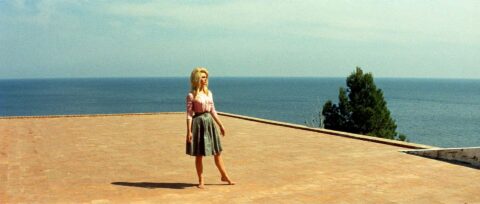
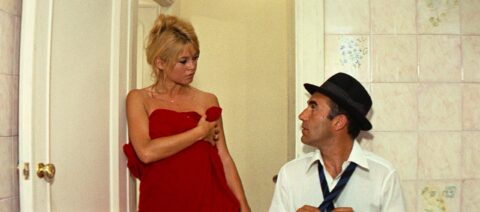
le mepris conjures the mediterranean wide-screen landscapes of l’avventura (1960) but now in technicolor. in this phase of his work godard was contrasting straight from the can primary colors to natural hues. when one thinks of the color of his 60’s work what comes to mind are the extraordinary sequences that take place in the forest and the seaside in pierrot le fou, and are so beautifully contrasted to the city shots painted (by the production designer pierre guffroy) in red, yellow and blue; or the brown and gray landscape of suburban paris, seen outside a train window, in la chinoise, contrasted to the regular use of red throughout the film (presumably signifying communism and/or mao’s little red book); or the beautiful trees in two or three things i know about her, contrasted to the harsh primaries of consumer products and advertising that constantly surround the main characters. but in all of godard’s color work flesh tones always play off primaries, most prominently here a bright yellow towel against brigitte bardot’s flesh in le mepris – a motif that returns twenty years later in prenom carmen.
interestingly the following year from le mepris antonioni would make red desert (1965) that would use color in a similar way, contrasting natural hues with man made primaries, but antonioni’s palette was more traditional. for example the fruit cart painted in shades gray and beige in red desert might be a painting by morandi, one of antonioni’s favorite painters, but an erstwhile traditionalist, and anti-modernist within the schools of post-war art. meanwhile godard’s sensibility was more pop using supermarket colors in a more seemingly random, ironic, offhand way and well within the modernist tradition of sixties art. for example, we can compare godard’s work of the same period with james rosenquist’s f-111 (1964-65), a satire of american consumer society and its military industrial complex (the f-111 was the most sophisticated fighter jet of the time) painted in bright day-glow primaries associated then with car dealerships, supermarkets and advertising. this confluence of godard’s work with pop art would reach an apotheosis with made in usa, two or three things i know about her, and weekend, all from 1967.
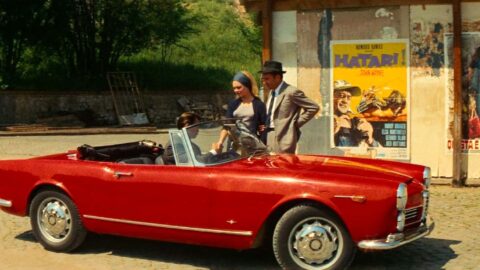
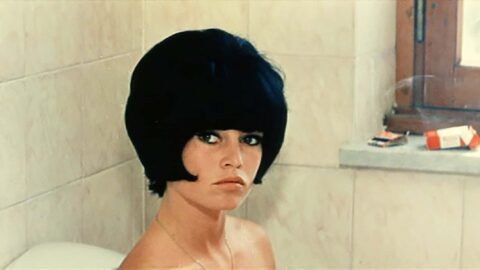
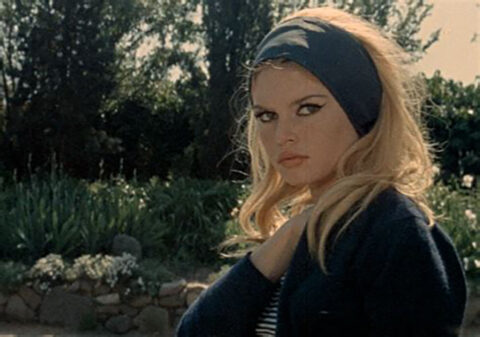
brigitte bardot plays camille javal, the disaffected antonioni heroine of l’avventura. they are linked by a crucial scene, that godard quotes later in the film, where monica vitti in antonioni’s film puts on a wig in front of her best friend, that she suddenly comes to resemble – a friend who will soon disappear, suggesting some form of metaphysical transference has taken place. camille’s husband paul (michele piccoli) wears a hat that links him to the american school of cinema, via dean martin’s role in some came running (1958), name checked by paul himself. already their cinematic personas – conferred by their headdress – hint at irreconcilable differences. this is a recurring motif in godard’s work from his first feature a bout de souffle, where, as godard explained himself, jean-paul belmondo’s character was based on the the crime/noir school of american cinema including the harder the fall (seen in poster form) and jean seberg’s character came from a previous film with otto preminger, bonjour tristesse.
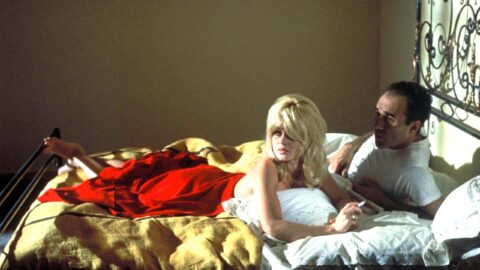
the plot of the disprezzo/le mepris centers around the disintegration of a relationship, of paul and camille, a young recently married couple, who have not been together long. camille is a former secretary/typist and paul is a professional writer and aspiring playwright. paul has been summoned to cinecitta, the fabled film studio in rome, to help doctor a script for a production already under way – an adaptation of the odyssey, the 7th century bc greek poem – being helmed by fritz lang playing himself and jeremy prokosch (jack palance) an american producer. when a script doctor is called for during a production it usually means that there is trouble on the set, as is the case here. paul and camille have recently purchased an expensive apartment they need to pay for so the french couple head to rome…” read the full article at cineaction website, where you can find this and many great article on all the films worth watching. by uh
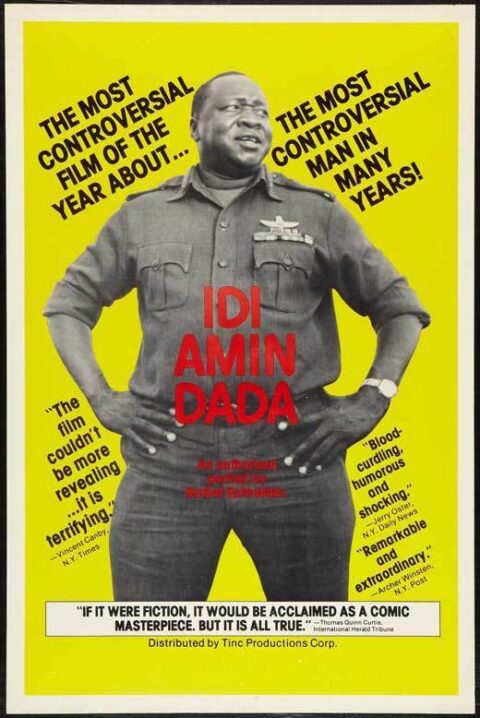
general idi amin dada – a self portrait movie poster
poor barbet schroeder he did do some good films too… here is one… a great documentary on the leader of uganda, general idi amin dada who was initially baked and empowered by the british, then made a fool off and ousted by the west. he was brutal dictator who was put into power to wrangle his people, not to meddle in the wests business. non the less the movie gave a great insight to this mans ego mania and absolute power. we got one of those in american now. by dd
at the expense of being screamed at… i do believe woman, more than men, have the ability to turn off emotions. men may subdue their emotions, but once there… it is not so easy for men to turn back.
a really beautiful breakdown of this loaded and constructed garden scene in le mepris by This video essay by cristina alvarez lópez and adrian martin of mubi
definitely one of my favorite films, seen it projected several time, have it on blue ray, and highly recommend catching it in a proper cinema if you can. by uh
“…i wouldn’t go so far to call the brother fat, i mean hes gotta weight problem, what the niger gots to do? hes samoan…” – that’s a damn shame
“…check out the big brains on brett, you’re a smart mother fucker, that’s right.” – check out the big brains on brett
“…man …i will never forget your ass for this… in fact what the fuck am i doing in the back, you’re the motherfucker who should be on brain detail…” – car scene brain detail
“…now, i want you go in that bag and find my wallet… its the one that says bad-mother-fucker…” – diner scene bad mother fucker
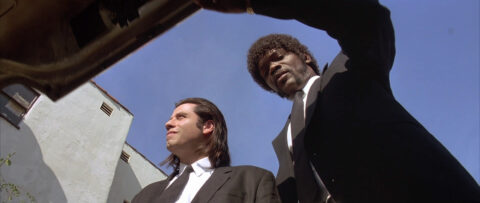
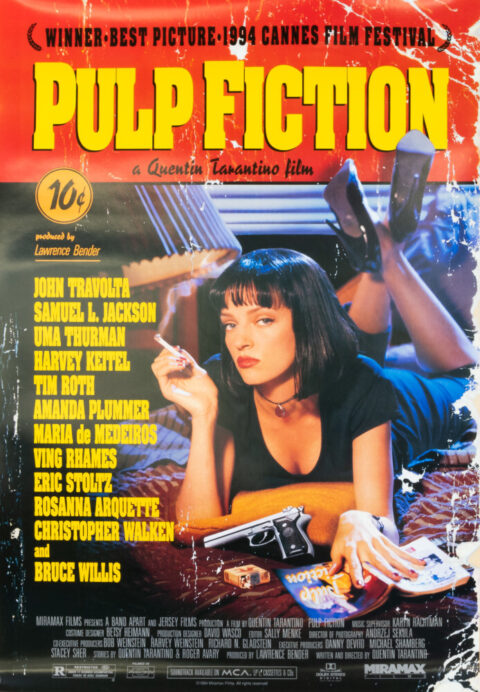
quentin tarantino’s classic pulp fiction — watched this gem on my flight west and remembered all the greatest bits of dialogue that tarantino and samual jackson mouthed off. just brilliant! the film is not a story but rather bits of ingeniously funny dialogue, and i’m not even including the great parts with bruce willis, just great stuff… worth another watch. by uh

 a visual collective outlet of inspiration